EUROPEAN BLUE CARD

The EU Blue Card: A Gateway to Opportunities in Europe
In an increasingly globalized world, the movement of skilled labor across borders has become essential for economic growth and innovation. The EU Blue Card is a significant initiative designed to attract highly skilled workers from outside the European Union (EU) to fill labor shortages in various sectors. This article will explore the EU Blue Card's purpose, eligibility criteria, application process, benefits, and its impact on both the EU economy and the lives of skilled migrants.
What is the EU Blue Card?
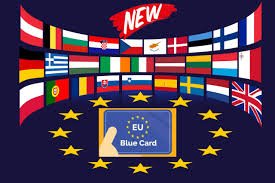
The EU Blue Card is a work and residence permit that allows non-EU citizens to live and work in an EU member state. Introduced in 2009, the Blue Card aims to make Europe a more attractive destination for highly skilled professionals, thereby addressing labor shortages in specific industries. The program is modeled after the United States' Green Card, providing a pathway for skilled workers to contribute to the European economy while enjoying certain rights and benefits.
Purpose of the EU Blue Card
The primary purpose of the EU Blue Card is to attract highly qualified professionals to the EU. Many member states face challenges in filling vacancies in sectors such as technology, engineering, healthcare, and research. By offering a streamlined process for skilled workers to obtain residency and work permits, the EU aims to enhance its competitiveness in the global labor market.
Eligibility Criteria
To qualify for an EU Blue Card, applicants must meet specific criteria, which may vary slightly by country but generally include the following:
1. Job Offer: Applicants must have a valid job offer from an employer in an EU member state. The job must be relevant to the applicant's qualifications and skills.
2. Educational Qualifications: Candidates must possess a higher education degree or equivalent qualifications. In some cases, significant professional experience may also be considered.
3. Salary Threshold: The job offer must meet a minimum salary threshold, which is typically set at 1.5 times the average gross salary in the host country. This threshold ensures that the applicant is compensated fairly and can support themselves.
4. Health Insurance: Applicants must have health insurance coverage for themselves and any family members who may accompany them.
5. No Threat to Public Policy: Applicants must not pose a threat to public policy, security, or health in the host country.
Application Process
The application process for the EU Blue Card can vary by country, but it generally involves the following steps:
1. Job Offer: Secure a job offer from an employer in an EU member state.
2. Gather Documentation: Collect necessary documents, including proof of qualifications, a valid passport, a job contract, and evidence of health insurance.
3. Submit Application: Submit the application to the relevant authorities in the host country. This may be done online or in person, depending on the country’s regulations.
4. Processing Time: The processing time for Blue Card applications can vary, but it typically takes a few weeks to a few months.
5. Receive Blue Card: If approved, the applicant will receive their EU Blue Card, allowing them to live and work in the host country.
Benefits of the EU Blue Card
The EU Blue Card offers numerous benefits to skilled workers and their families, including:
1. Work and Residence Rights: Blue Card holders have the right to live and work in the host country for an initial period of up to four years, with the possibility of renewal.
2. Family Reunification: Blue Card holders can bring their family members to the host country, allowing spouses and children to join them.
3. Mobility within the EU: After 18 months of holding a Blue Card, individuals can move to another EU member state for work, provided they meet the necessary requirements.
4. Pathway to Permanent Residency: Blue Card holders may be eligible for permanent residency after a certain period, typically 33 months, or 21 months if they demonstrate language proficiency.
5. Access to Social Benefits: Blue Card holders are entitled to the same social benefits as local workers, including healthcare, education, and social security.
Impact on the EU Economy
The EU Blue Card has a significant impact on the European economy. By attracting highly skilled professionals, the program helps fill critical labor shortages, particularly in sectors that drive innovation and economic growth. Skilled migrants contribute to the economy by bringing diverse perspectives, enhancing productivity, and fostering creativity.
Moreover, the Blue Card program promotes a more competitive labor market within the EU. By encouraging skilled workers to relocate to Europe, the EU can better compete with other regions, such as North America and Asia, for top talent.
Challenges and Criticisms
Despite its benefits, the EU Blue Card program faces several challenges and criticisms. Some argue that the application process can be cumbersome and time-consuming, deterring potential applicants. Additionally, the varying criteria and regulations across member states can create confusion and inconsistency.
There are also concerns about the potential for exploitation of migrant workers. Critics argue that without proper protections, skilled migrants may face unfavorable working conditions or discrimination. Ensuring that employers adhere to fair labor practices is crucial for the success of the Blue Card program.
Conclusion
The EU Blue Card represents a vital initiative for attracting skilled labor to Europe, addressing labor shortages, and enhancing the region's competitiveness in the global economy. By providing a clear pathway for skilled workers to live and work in the EU, the program not only benefits migrants and their families but also contributes to the overall growth and innovation of the European economy.
As the world continues to evolve, the EU Blue Card will play an essential role in shaping the future of work in Europe, fostering a diverse and dynamic workforce that can meet the challenges of tomorrow. For skilled professionals seeking new opportunities, the EU Blue Card offers a promising gateway to a fulfilling career and life in Europe.
What's Your Reaction?